Williamsburg Transportation Guide: L Train, Ferry Service, and Manhattan Access
Neighborhood
Neighborhood
Williamsburg has long been one of Brooklyn’s most desirable neighborhoods, known for its creative energy, waterfront lifestyle, and vibrant dining scene. But behind the cafés and skyline views, there is a major reason demand remains consistently strong: transportation. For buyers, renters, and investors alike, Williamsburg offers one of the most efficient and flexible commutes to Manhattan anywhere in Brooklyn.
Whether you work in Midtown, Downtown Manhattan, or prefer a hybrid schedule, Williamsburg’s transportation network makes daily travel straightforward. With the L train, NYC Ferry service, buses, and easy bike access, residents are rarely tied to a single route. That flexibility plays a major role in why property values here continue to outperform other Brooklyn neighborhoods.
The L train is the foundation of Williamsburg transportation. Running 24 hours a day, seven days a week, it connects the neighborhood directly to Manhattan with minimal travel time. From Bedford Avenue, the most central stop, it takes roughly 8 to 10 minutes to reach Union Square.
Key L train stops serving Williamsburg include:
Bedford Avenue for North Williamsburg and the waterfront
Lorimer Street for East Williamsburg and surrounding residential blocks
Graham Avenue for quieter, more neighborhood-focused areas
Union Square acts as a major transit hub, allowing easy transfers to the 4, 5, 6, N, Q, R, and W lines. This makes Williamsburg especially appealing to professionals working across Manhattan, from Midtown offices to Downtown finance hubs.
For real estate buyers, proximity to an L train station often translates directly into higher resale value and stronger rental demand. Apartments within a short walk of Bedford Avenue consistently command premiums, especially for one- and two-bedroom units.
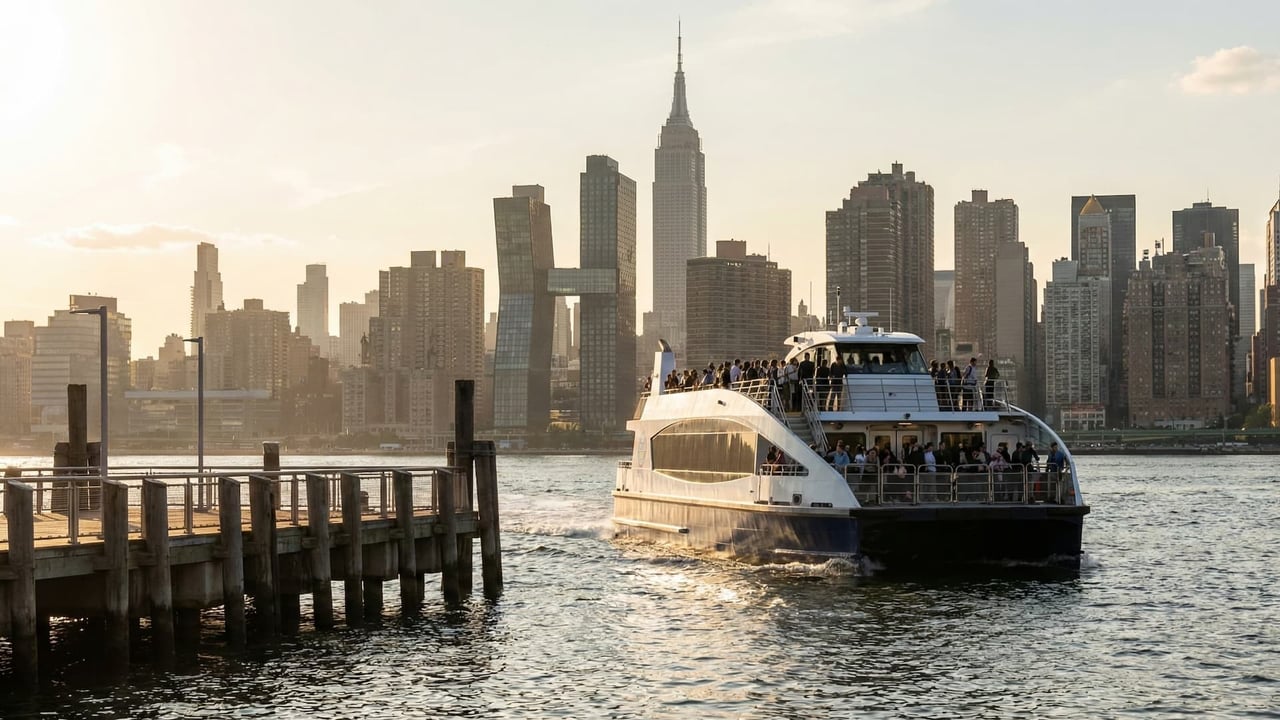
The NYC Ferry has become one of Williamsburg’s most popular transportation options, particularly for residents living along the East River. With multiple landings, including North Williamsburg and South Williamsburg, the ferry offers a calmer alternative to subway travel.
Ferry routes connect Williamsburg to:
Wall Street and the Financial District
Midtown East and East 34th Street
Long Island City and Astoria
Dumbo and Brooklyn Navy Yard
Commute times vary by route, but many trips to Manhattan fall between 15 and 25 minutes. Riders enjoy open-air decks, skyline views, and a far less crowded experience compared to peak subway hours.
From a lifestyle perspective, the ferry has reshaped waterfront living. Buildings near ferry landings often attract buyers seeking both convenience and quality of life. As ferry service continues to expand across the city, these locations are increasingly seen as long-term value plays.
While the subway and ferry handle most Manhattan-bound commutes, Williamsburg’s bus network plays an important supporting role. Routes like the B62, B32, and B24 connect residents to nearby Brooklyn neighborhoods, including Greenpoint, Downtown Brooklyn, and Bushwick.
Buses are particularly useful for:
Short local trips
School commutes
Connecting to subway lines outside the L train corridor
For residents who prefer not to rely on a single transit option, buses provide additional flexibility and coverage.
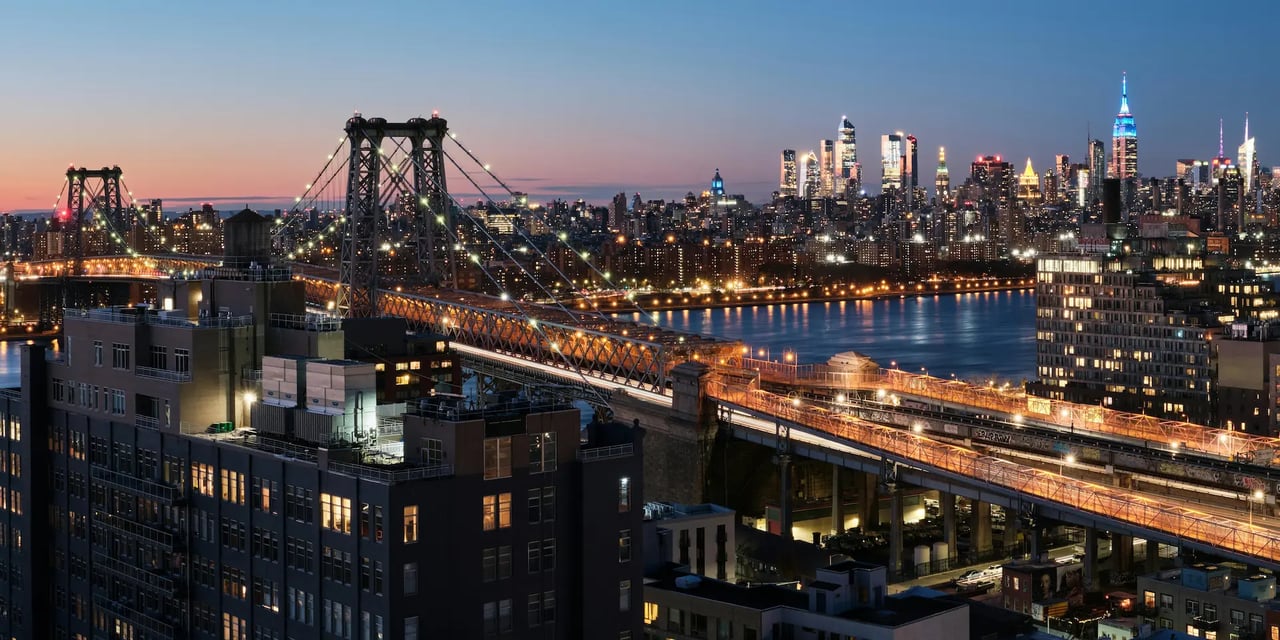
Williamsburg is one of the most bike-friendly neighborhoods in Brooklyn. Protected bike lanes run along major corridors, and the Williamsburg Bridge offers a direct cycling route into Lower Manhattan.
Many residents bike to:
SoHo and the Lower East Side
Downtown Manhattan
Nearby Brooklyn neighborhoods
Citibike stations are widely available, and bike storage has become a sought-after building amenity in newer developments. Walkability is another major advantage. Grocery stores, gyms, parks, and restaurants are all easily accessible on foot, reducing the need for daily transit altogether.
Strong transportation access does more than shorten commutes. It directly impacts property value, rental stability, and long-term demand. Williamsburg benefits from having multiple transit options, which insulates the neighborhood from service disruptions and changing work patterns.
From a real estate perspective, transportation strength leads to:
Faster resale timelines
Higher tenant retention
Broader buyer and renter appeal
More resilient pricing during market shifts
Buyers working hybrid schedules often prioritize neighborhoods where commuting is optional rather than mandatory. Williamsburg’s ability to offer both fast Manhattan access and a self-contained local lifestyle makes it especially attractive in today’s market.
For professionals who want flexibility, Williamsburg consistently ranks near the top of Brooklyn neighborhoods. Few areas offer a combination of subway speed, ferry access, bike-friendly routes, and walkability in one place.
Whether you are commuting five days a week or just a few days a month, Williamsburg allows you to choose how you travel rather than forcing a single option. That freedom is a major reason why demand remains strong across market cycles.
At Archpoint Advisory, we help clients evaluate not just apartments, but how they fit into daily life. Transportation access is one of the most important factors in long-term satisfaction and resale performance, and Williamsburg continues to deliver on both fronts.
If you are exploring opportunities in Williamsburg, from waterfront condos near the ferry to classic walk-ups close to the L train, our team can guide you through the options that best match your commute and lifestyle goals.
Contact Archpoint Advisory today to explore Williamsburg properties built around convenience, connectivity, and long-term value.
Stay up to date on the latest real estate trends.
Neighborhood
Why Green Space and Academic Influence Continue to Drive Demand in One of Manhattan's Most Desirable Neighborhoods
Neighborhood
Why Retail Convenience Continues to Drive Housing Demand in One of Brooklyn's Most Desirable Neighborhoods

Neighborhood
How New Construction Is Reshaping One of Manhattan’s Most Competitive Residential Markets

Neighborhood
Why Landmark Protections Help Preserve Tribeca’s Unique Real Estate Identity
s
Why Manhattan’s Dining Culture Continues to Shape Luxury Living and Real Estate Demand

Neighborhood
Why Investors Continue Watching Manhattan’s Most Evolving Neighborhood
Neighborhood
Why Investors Continue Targeting Brooklyn’s Most Competitive Neighborhood
Neighborhood
Why Hotels, Nightlife, and Cultural Energy Continue to Drive Housing Demand in Gramercy
Neighborhood
Understanding the Buying Process Behind One of Brooklyn’s Most Competitive Housing Markets
We love nothing more than helping buyers and sellers achieve their home-buying and selling goals. If you’ve got questions, we can’t wait to answer them.